

How to Make Beer: A Complete Guide to the Beer Brewing Process
Beer is made by fermenting a sugar-rich liquid called wort, which you extract from malted barley and water. The full beer brewing process typically takes two to six weeks, depending on the style, and requires only a handful of core ingredients plus basic equipment.
What Goes Into Beer: Understanding Beer Ingredients
Every batch of beer starts with four foundational beer ingredients: water, malted grain, hops, and yeast. Each one plays a distinct and irreplaceable role in determining the final flavor, aroma, color, and alcohol content.
Water
Water makes up roughly 90 to 95 percent of any finished beer, and its mineral composition affects the taste more than most brewers expect. Soft water suits pale lagers, while harder, sulfate-rich water works better for bold hop-forward ales.
Hops
Hops contribute bitterness that balances malt sweetness, along with floral, citrus, or pine aromas depending on the variety. They also act as a natural preservative that extends shelf life.
Malt
Malted barley provides the fermentable sugars that yeast will later convert into alcohol. The degree to which the grain is kilned determines whether your beer finishes pale and clean or dark and roasty.
Yeast
Yeast consumes the sugars in wort and produces alcohol and carbon dioxide as byproducts. The strain you choose shapes the entire character of the finished beer — from fruity esters to clean, neutral profiles.
How to Make Beer at Home: Equipment You Actually Need
You do not need a professional brewery to brew your first batch. A basic home setup includes a large brew kettle, a fermentation vessel with an airlock, an auto-siphon, a bottle capper, and a thermometer.
Brew Kettle
A stainless steel kettle with a minimum five-gallon capacity handles most beginner recipes. Larger pots reduce the risk of boil-overs and give you room to work without constantly managing the heat.
Sanitization Equipment
Proper sanitation is the single most critical skill in home brewing. Any bacteria that enter your fermenter can ruin an entire batch, so a no-rinse sanitizer like Star San is worth purchasing before anything else.
Bottling and Capping Tools
An auto-siphon lets you transfer beer without splashing and introducing oxygen. A bottle capper and a set of reusable crown caps seal everything up once carbonation is primed.
Fermentation Vessel
A food-grade plastic bucket or glass carboy works fine for fermentation. Fit it with an airlock so CO2 can escape while outside air and contaminants stay out.
Thermometer and Hydrometer
A thermometer keeps you from pitching yeast into wort that is too hot, which would kill it. A hydrometer measures specific gravity so you can track fermentation progress and calculate the final alcohol percentage.
Cleaning Supplies
Brewing equipment must be cleaned before it can be sanitized. Use an unscented, residue-free cleaner like PBW to scrub away deposits that sanitizer alone cannot dissolve.
The Beer Brewing Process Step by Step
The brewing process follows a consistent sequence regardless of the style you are making. Each stage builds on the one before it, so rushing any step has consequences that carry through to the finished product.
Step 1: Mashing
Mashing is the process of soaking crushed malted grain in hot water — typically between 148 and 158 degrees Fahrenheit — for 60 minutes. The heat activates enzymes in the grain that convert starches into fermentable sugars.
Step 2: Lautering and Sparging
After mashing, you drain the liquid from the grain bed. Sparging means rinsing the grain with additional hot water to extract every last bit of fermentable sugar before moving on to the boil.
Step 3: The Boil and What Is Wort in Beer
The sweet liquid you collect from the mash is called wort. What is wort in beer? It is essentially unfermented beer — the sugar-rich solution that yeast will later transform into alcohol. You boil the wort for 60 to 90 minutes, adding hops at different intervals to control bitterness and aroma.
Step 4: Cooling the Wort
Before you add yeast, the wort must cool to fermentation temperature — usually between 65 and 72 degrees Fahrenheit for ales, or lower for lagers. An immersion chiller or ice bath speeds this process significantly.
Step 5: Pitching the Yeast
Pitching simply means adding yeast to the cooled wort. Rehydrate dry yeast according to the packet instructions, or swirl and pour liquid yeast directly from its package. Seal the fermenter, attach the airlock, and move it to a stable temperature environment.
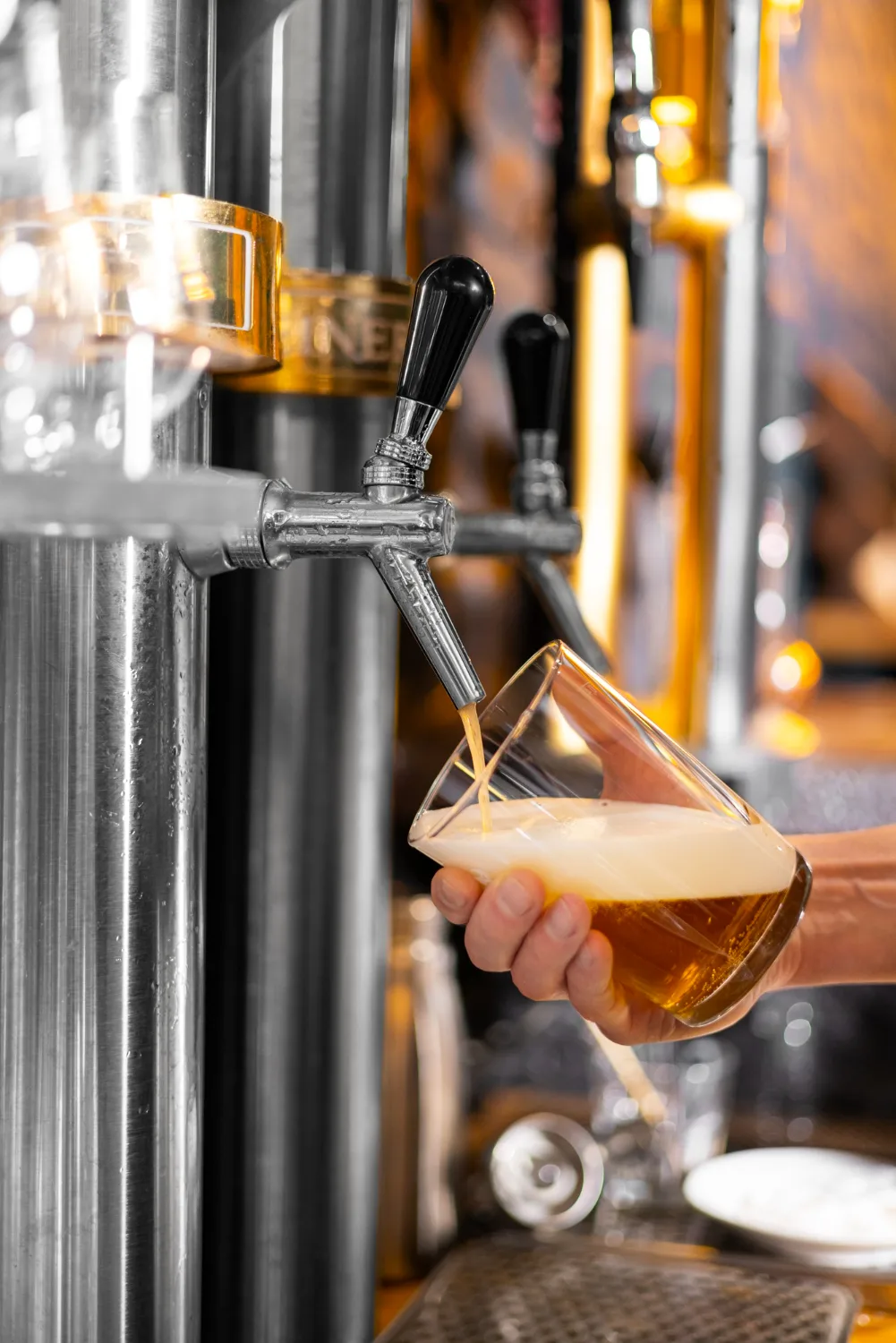
The Beer Fermentation Process
The beer fermentation process begins within 24 to 48 hours of pitching yeast, and you will see bubbling through the airlock as CO2 escapes. Primary fermentation for most ales completes in one to two weeks, though the timeline varies by yeast strain and temperature.
Primary Fermentation
During primary fermentation, yeast aggressively consumes sugars and produces alcohol, CO2, and a range of flavor compounds. Foam, called krausen, forms on top of the beer and then subsides as activity slows.
Secondary Fermentation and Conditioning
Many brewers transfer beer to a second vessel for conditioning, which clears the beer and allows flavors to mellow. This secondary stage can last anywhere from a few days to several weeks depending on the style.
How Long Does It Take to Make Beer
How long does it take to make beer? For most beginner-friendly ales, expect a minimum of three to four weeks from brew day to drinking day. That includes roughly two weeks of fermentation, a week of bottle conditioning, and a few days of cold crashing in the refrigerator.
Lagers require cold fermentation at near-freezing temperatures and a lagering period of four to eight weeks, which significantly extends the timeline. Wheat beers and session ales are on the faster end, sometimes drinkable in as little as two to three weeks.
How to Make Homemade Beer: Priming and Bottling
Once fermentation is complete, you add a small, measured amount of priming sugar to the beer before bottling. This gives residual yeast a final food source so it produces the CO2 that carbonates your beer inside the sealed bottle.
Siphon the beer carefully into bottles, leaving about an inch of headspace, then cap them and store at room temperature for one to two weeks. After that, refrigerate before serving and allow at least 24 hours for the yeast to settle.
Homebrewing rewards patience above all else. Rushing the process produces flat, hazy, or off-flavored beer. Follow each stage carefully, keep your equipment clean, and the results are reliably good even on a first attempt.
Latest from Blog
Fusce dignissim blandit justo, eget elementum risus tristique. Nunc lacus lacus, sit amet accumsan est pulvinar non. Praesent tristique enim lorem.
Irish beer
Ireland has a brewing identity that most people reduce to one dark pint, but the full picture is considerably…
German beer
Germany produces some of the most technically precise and historically significant beer in the world. The country’s brewing tradition…